
Selling the family house in Portugal to move somewhere new
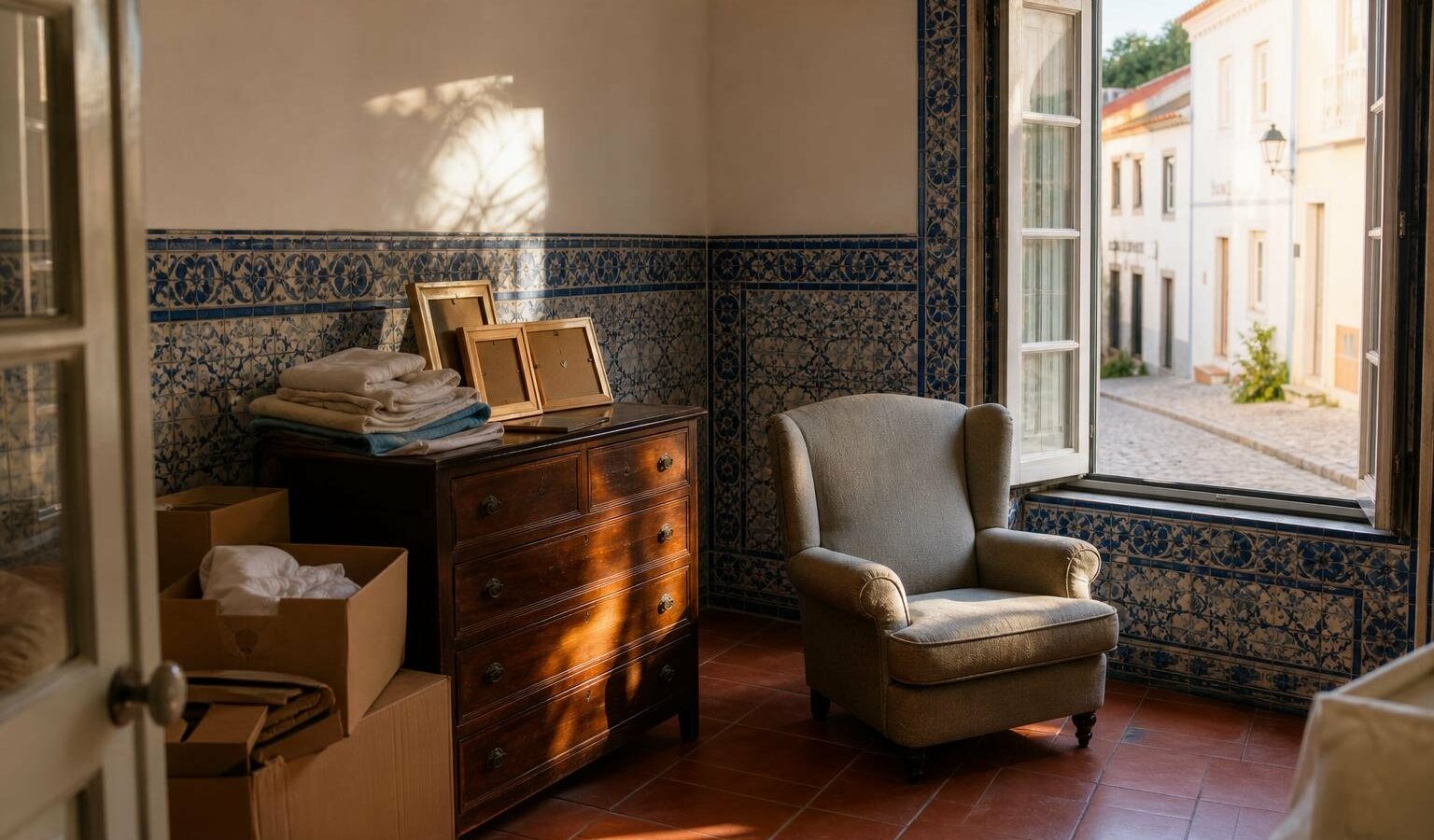
Selling the family home in Portugal to move somewhere new starts with one simple step: knowing what your property is worth. That figure shows you what you could buy or rent next. It helps you plan calmly, with no obligation to sell.
The children have left, the property now feels too big, or the stairs take more effort than they used to. Many owners then think about a smaller home in the same neighbourhood, a flat closer to family or a senior residence. Each of these options is easier to plan when you know how much you can count on. You go at your own pace, on your own or with the people close to you.
Find out what my property is worth, free of charge
Selling the family home to move: start from its value
Before you choose your next home, you need a starting point. The market value of your current property is one. It decides nothing for you, but it makes your options clearer.
Knowing what you can count on
The value of your current property tells you what kind of home you could buy or rent next. It also tells you what will be left for everyday life.
Take a T4 (four-bedroom flat) in a quiet neighbourhood of Oeiras, where a family has lived for many years. The owners are weighing up a T2 with a lift in the same neighbourhood, a flat near their daughter in Setúbal, and a senior residence with services. Each choice affects the budget differently, and the value of the T4 is the basis for comparing them.
The sale price is not the amount you will finally receive. Selling costs come off it, such as the agency's commission or paying off a mortgage that is still running. The what's left after the sale tool gives you an idea, and the guide Quanto custa vender uma casa em Portugal explains each cost in detail.
Deciding at your own pace
Knowing the value does not commit you to selling. It gives you solid information to think things over, talk with your family and decide when you feel ready.
Some people prefer to wait until a plan is settled, or until they have seen a home they like, before putting theirs on the market. Others wonder whether to keep the property and let it out. The sell or rent tool sets the two options side by side. The market moves, so you can run the estimate again later, when the time comes to decide.
Talking it through as a family, with figures to hand
A clear estimate that you can share with your children, or with whoever is helping you, keeps the conversation grounded in facts. Everyone starts from the same figure, not from a price a neighbour mentioned.
This helps when your children live far away, elsewhere in Portugal or abroad. The report can be sent to them, and they can read it when they have time. You can see what it looks like in this sample report.
Here are a few questions to discuss together:
- Which neighbourhood or town would you like to live in next, and close to whom?
- Should the next home be all on one level or have a lift?
- Would you rather buy again or rent?
- What will you do with the furniture and family belongings that won't come with you?
- Who can go with you to the important appointments?
Judging offers with confidence
If you know the market value of your property, you are better prepared to judge the offers you receive, wherever they come from.
Two situations come up often. A buyer offers a quick sale, but at a price well below the market. Or an agency suggests a very high asking price to win the listing, and then the property sits on the market for months without viewings. With a reference value, you spot these gaps sooner. If an offer comes in, the page Recebi uma proposta: é justa? helps you read it.
Before signing with an agency, an independent opinion can also reassure you. The page independent opinion before choosing an agency explains how to use one. And if a relative or neighbour wants to buy your property, starting from the market value helps set a price that is fair to everyone.
For a first figure, the estimate takes into account the neighbourhood, the size, the condition and the features of the property, drawing on market data for your area. The methodology page explains its principles and limits.
Selling the family home to move somewhere new: what to plan for
Before you sell, think about what comes next. Your plans depend mainly on where you want to live and how you want to live there. These are the options people choose most often:
- a smaller property in the same neighbourhood, so you keep your routines, your pharmacy and your neighbours;
- a property close to your children or grandchildren, sometimes in another municipality;
- renting, so you don't put all the sale proceeds into a new purchase;
- a senior residence, with services on site.
Each option comes with different costs. The value of your current property is the starting point for every calculation. Say you sell a T4 (four bedrooms) to buy a T2 in the same parish (freguesia). The gap between the two prices shows you what will be left for day-to-day living.
What selling costs and what you keep
Selling involves costs. There is the commission if you use an agency. There is also the certificado energético (energy performance certificate), which you need before the property can go on the market. And if there is still a loan on the property, it has to be repaid when you sell. You'll find the details in our guides how much it costs to sell a property and selling with a mortgage outstanding.
To see the amount you will actually keep, use our calculator for what's left after the sale. Compare that figure with the price of your next home, not the asking price.
If you buy again, the purchase has its own costs: IMT (the tax paid when buying a property), Imposto do Selo (stamp duty) and the fees for the escritura (the deed of sale signed before a notary). For a senior residence, ask in writing what the monthly fee covers, such as meals, care, cleaning and laundry, and whether there is a waiting list.
Sell first or find your next home first
If you sell first, you know exactly how much money you have. On the other hand, you need somewhere to go once the property is sold. If you find your next home first, you know where you're going, but you may have to pay before the sale money arrives.
There is a middle way. In the CPCV (promissory contract of sale), you can agree with the buyer on an escritura date that gives you time to move. If you're still weighing up selling against letting your property, our sell or rent tool helps you compare the two.
Tax on the capital gain
Selling your main home can affect your IRS (income tax), through the rules on mais-valias (capital gains). The law sets out special cases, for example when the proceeds are reinvested in another home. Those cases depend on specific conditions.
Every situation is different. Before you sign, check yours with a contabilista certificado (certified accountant) or with the Finanças (the tax authority), which publishes its guidance on the Portal das Finanças. Keep your purchase deed and the invoices for any work done on the property, as they may be used in the calculation.
The property's documents and the owners' signatures
Gather the property's documents early: the caderneta predial (the property's tax record), the certidão permanente (land registry certificate) and the licença de utilização (habitation licence). If you bought the property a long time ago, tracking down some of these can take a while. Our checklist of documents for selling tells you what to request and where.
Every owner has to sign the sale. If the property is in both spouses' names, both sign. If your spouse has passed away, the estate usually needs to be settled before the sale. Our page on property valuation for an inheritance explains this step.
Getting support, at your own pace
Take your time and have people you trust around you. You can ask a relative or friend to join you for viewings, help choose an agency and read through the paperwork with you. They can also be there when you sign the CPCV and the escritura.
Before you hand the sale to an agency, read the mediation contract carefully: whether it is exclusive, how long it lasts and what the commission is. Nothing obliges you to sign on the day of the meeting. Getting an independent opinion before choosing an agency also helps you judge the price you're being offered.
From valuation to moving day, one step at a time
There is no single order that suits everyone. The steps below follow the most common path. You can pause between any two of them for as long as you like.
1. Find out what your current property is worth
This is where to start, because every other figure depends on it. A free valuation gives you a first value. It draws on market data for your area and on the features of your property. It does not replace a bank valuation or a certified valuation, but it is enough to start thinking things through.
Your property may have features of its own, such as a large plot, older renovation work or a fine view. In that case, a market study gives a more precise figure, because it also takes in the views of advisers who know the municipality. An example report shows you what you would receive.
2. Plan the next home and what it will cost
You might buy a smaller home, rent, or move into a senior residence. Each option calls for a different budget. Write down what each one costs at the start and then every month: building service charges, rent, the monthly fee of a residence, or work to adapt a home.
Then compare these costs with what you will actually have left once the sale costs are paid. The what's left after the sale tool helps you work this out. The guide on the cost of selling in Portugal explains each expense.
If a mortgage is still running on the property, it is usually paid off when the sale goes through. The guide to selling with a mortgage outstanding explains the order in which to take each step.
Think early about whether you would rather sell before buying, or the other way round. Selling first means you know exactly what budget you have, but you will need somewhere to live in between. Buying first spares you a temporary move, as long as you can pay for two homes for a while.
3. Talk it over with your family and check the tax side
Share the valuation with your children or with whoever is helping you. That way, the conversation starts from facts. If the property belongs to several people, after an inheritance for example, all the owners must agree to sell. For that situation, see the page on property valuation as part of an inheritance.
Selling your main home can have an effect on IRS (Portuguese income tax). Every situation is different. Have yours checked by a certified accountant or at the Finanças (the tax office) before you sign any commitment. On the Portal das Finanças you can also find your property's tax documents.
4. Decide how to sell and gather the paperwork
You can sell on your own or through an agency. Before signing with an agency, an independent valuation helps you judge the price it suggests. If it puts your mind at rest, ask someone close to you to come to meetings and read the documents with you.
Get the documents ready early, as some come from the Câmara Municipal or the land registry, and that takes time. These are the main ones. The caderneta predial is the property's tax record, issued by the Finanças. The certidão permanente is the land registry extract. The licença de utilização is the occupancy permit, issued by the municipality. You will also need an energy certificate.
The documents for selling checklist and the documents guide help you make sure nothing is missed.
When an offer comes in, compare it with the market value before you reply. The I've received an offer page lists the points to check.
5. Sign, then move at your own pace
A sale often begins with a CPCV, a promissory contract of purchase and sale signed by both sides. It ends with the escritura, the final deed of sale signed before a notary or another authorised professional. The time between the two signings is agreed with the buyer. The guide on how long a sale takes explains what can make it longer.
You usually hand over the keys on the day of the escritura. You may need more time to move, or to wait until your next home is ready. If so, say so during the negotiation, so that the agreed date is written into the CPCV.
Sorting through a lifetime of belongings often takes longer than expected. Start early, one room at a time. Decide together as a family what each person would like to keep, so this step feels calmer for everyone.
Which comes first: selling or finding your next home
There are two ways to go about it. You can sell first and then look, or secure your next home before putting yours on the market. Neither is better in itself. It depends on your budget, how flexible your dates are and what gives you the most peace of mind.
Selling before you look
You know the price you actually achieved, so you know exactly what you can spend next. You never pay for two homes at once. When choosing where to live next, you start from a firm figure rather than an estimate.
On the other hand, you need somewhere to live if your new home is not ready on the day of the sale. While the property is on the market, buyers will also come to view it, sometimes several times a week. It helps to keep the place tidy and to set viewing times that suit you.
Securing your next home before selling
You know where you are going, and the move can be planned more calmly. Many people who are attached to their surroundings find this reassuring. It does mean being able to pay for the next step before the sale money comes in.
For a purchase, that means having enough savings or arranging a bridging loan with your bank. For a rental or a care home, the monthly payments may start while you are still paying the running costs of your current property: IMI (the annual municipal property tax), condominium fees, water and electricity. Work out the costs over several months, not just the first one. If there is still a mortgage on your property, the guide on selling with a mortgage outstanding explains the order in which to do things.
The CPCV: setting an escritura date that gives you time
The CPCV (contrato-promessa de compra e venda, the promissory contract of sale) is signed with the buyer before the final deed. It sets out the price, the conditions and the deadline for signing the escritura (the deed of sale, signed before a notary or another authorised official). This is the moment to choose a date that leaves you time to prepare your move.
That date is open to negotiation. Buyers often need time too, for example to have their mortgage approved, so a comfortable timescale can suit both sides. Have a lawyer or a solicitador (a legal professional authorised to handle property deeds) read the CPCV before you sign. The guide to how long a sale takes in Portugal covers what can hold up each stage.
Handing over the keys without moving twice
The keys are usually handed over on the day of the escritura. Nothing stops you agreeing something different with the buyer, such as staying on for a few weeks after signing. This arrangement must be in writing, either in the CPCV or in a separate document, with the date you will leave and the terms.
Take a simple example. Your new flat will be available at the end of a given month. You suggest an escritura a few days after that date, which spares you a storage unit, temporary accommodation and a second move.
Moving into a care home
Make enquiries early, even if nothing is decided yet. Ask about the admission conditions, the documents required, whether there is a waiting list and how a place is reserved. In Portugal, these homes are officially called ERPI (estrutura residencial para pessoas idosas, residential facilities for older people). They may be run privately or by social institutions, each with its own admission rules.
Once you know your moving-in date, it becomes your reference point. You then set the escritura date and the key handover around it, not the other way round. Some homes also offer short stays, which can make the change easier.
Questions to talk through as a family
- Who can come and help with sorting things out, and on which dates?
- Which furniture and belongings will come with you, given the size of the new home?
- What happens to family keepsakes: shared among the children, kept by one of them, or given to a charity?
- Where could you stay for a few weeks if the dates do not line up: with one of the children, in a short-term let, or on a short stay in a care home?
- Who will go with you to sign the CPCV and the escritura?
When sorting, start with the rooms you use least, such as the loft, the garage or the spare bedrooms. Leave everyday items until last, once your moving date is fixed.
Common questions about selling the family home to move somewhere new
Does finding out what my property is worth mean I have to sell?
No. The estimate is free and there is no commitment. It simply tells you what you can count on. You then have all the time you need to think it over, talk it through with your family and decide when you feel ready.
What is my property worth today?
That depends on the neighbourhood, the size, the condition and the features of the property: which floor it is on, whether there is a lift, a terrace or a garage, and any work it may need. The free estimate gives a first figure based on market data for your area. If you would like a more detailed document to keep or to show your family, Tagus Value offers a market study. You can see an example report and our plans and prices.
Can this estimate be used for the bank or for official purposes?
No. The free estimate is neither a bank valuation nor a certified valuation. For a mortgage, or for any procedure that requires an official document, you need a valuer (perito avaliador) registered with the CMVM, Portugal's securities market regulator. This guide explains the difference: bank valuation or market study.
Will I pay tax on the gain if I sell the property I live in?
You may, under IRS (Portuguese income tax). There are specific rules for a main home, particularly when the proceeds of the sale are reinvested, but they depend on precise conditions that vary from case to case. Check your own situation with a certified accountant (contabilista certificado) or with the Finanças (the Portuguese tax office), ideally before you sign the CPCV (the promissory contract of sale).
How much will I have left once the property is sold?
From the sale price you need to take off the costs of selling, such as the agency's commission, the repayment of any outstanding mortgage and any tax due on the gain. Our what's left after the sale tool helps you work this out. You will find the costs set out in detail in the guide how much it costs to sell a property.
Which documents should I get ready to sell?
The main ones are the caderneta predial (the property's tax record), the certidão permanente (the land registry certificate), the energy certificate and the licença de utilização (the occupancy permit). If you bought the property a long time ago, some papers may need updating, and that can take a while. The documents for selling checklist lets you see what you already have.
Can one of my children help me make the request?
Yes. A family member can fill in the request with you, or for you if you prefer. You can then share the estimate and the report with anyone you like, so that everyone in the family is working from the same information.
What if I'd rather not handle the viewings on my own?
An estate agency can take care of them with you. If you wish, Tagus Value can put you in touch with partner agencies in your area. A family member can also be there for the viewings and when you choose the agency. Knowing what your property is worth before you meet them helps you judge the price they suggest: see an independent opinion before choosing an agency.
Sources
- Portal das Finanças portaldasfinancas.gov.pt
What Tagus Value gives you
A free estimate
A first market value in a few minutes, calculated using real prices in the property's area.
The Premium report, reviewed by an adviser
A full study, with comparable properties, explained adjustments and a price range, reviewed by a Tagus Value adviser.
The Tagus Value estimate and report are opinions of market value: they do not replace the VPT, a valuation by a property valuer registered with the CMVM, or a valuation required by the Tax Authority, a bank or in court proceedings.
Find out what my home is worth, free
General information only, which does not constitute legal or tax advice. For your specific case, consult a solicitor (solicitador), a notary, a lawyer or the Tax Authority.